

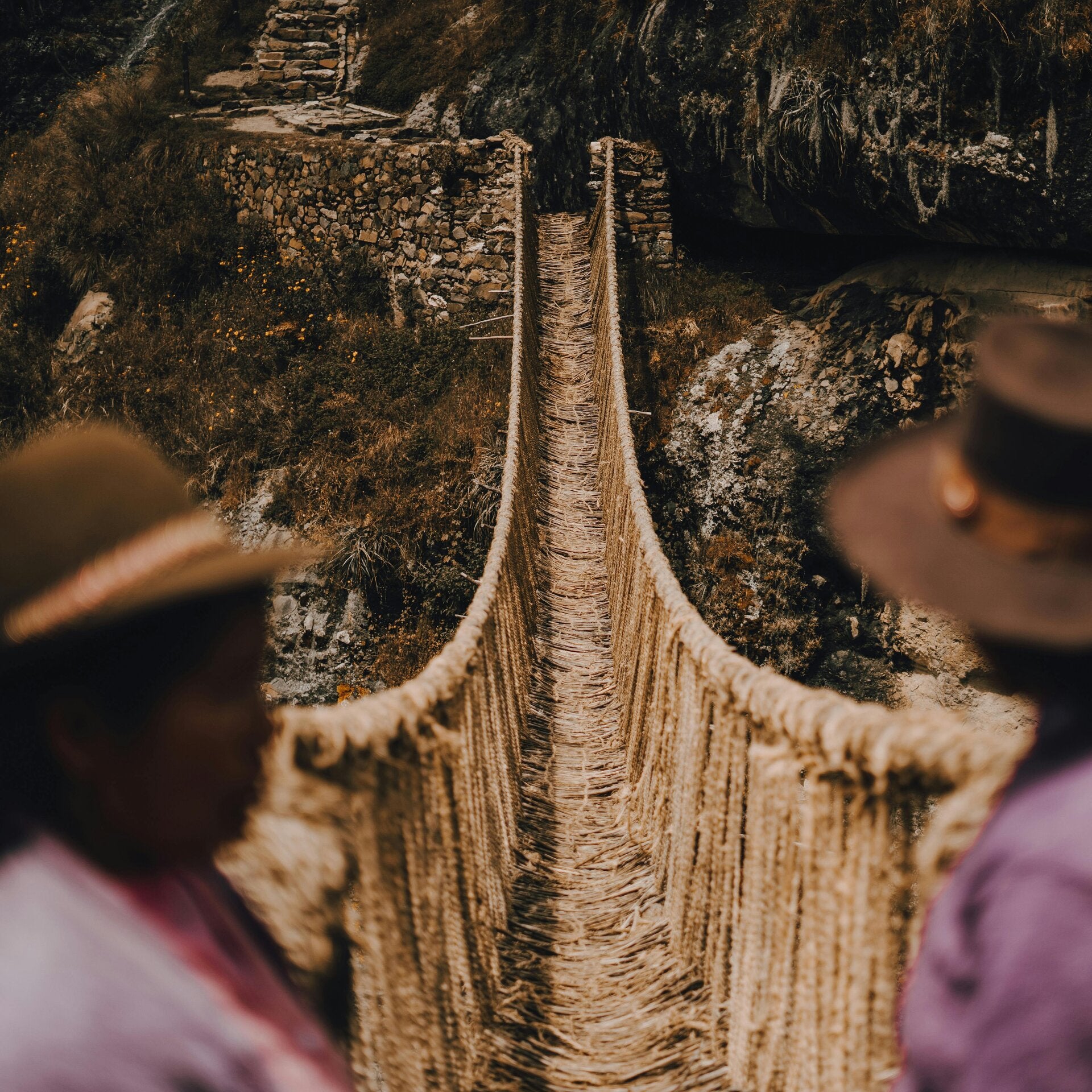
History of cordage
Cordage—the art and science of making rope and string—is one of humanity's oldest technologies. Dating back over 25,000 years, early people twisted local plant fibres and animal hides into twine. This allowed early humans to hunt, fish, and build shelters. Today, basic cordage is still made using these same twist-and-braid methods, though advanced synthetics have vastly improved durability. [1, 2, 3, 4, 5, 6, 7]
The Prehistoric Origins
Long before recorded history, hunter-gatherers required reliable lines to create tools and secure their dwellings. Archaeologists have discovered evidence of twine made from plant fibres and animal sinew that dates to the Palaeolithic Era. In France, fossilised impressions of cordage made 177,000 years ago have even been identified in the Lascaux cave network. Making cordage by hand was an essential survival skill, usually achieved by rolling and twisting fibres (like dogbane or nettle) against the thigh to create strong yarns. [1, 2, 3, 4, 5]
Ancient Engineering & Maritime Exploration
As civilisations advanced, so did the scale of cordage production. [1]
- Ancient Egypt (approx. 4,000 BC): The Egyptians were the first to develop specialised tools for ropemaking. Using papyrus reeds, palm fibres, and flax, they fashioned the immense cables necessary to lift stone blocks for pyramid construction and rigging for river vessels. [1, 2, 3, 4]
- China (approx. 2,800 BC): Hemp fibre rope gained widespread use, eventually spreading throughout Asia for use in agriculture and fishing. [1, 2]
- The Age of Sail: As global trade expanded across oceans, tall ships relied heavily on durable, thick ropes crafted from materials like hemp, manila, and sisal to manage complex sail rigging and anchoring. [1, 2, 3]
The Industrial Revolution and "Ropewalks"
Before factory automation, long sections of rope were constructed in specialised, open-air buildings known as ropewalks. These facilities were often hundreds of metres long because the total length of the final rope was dictated by the length of the building. Workers would walk backward down the track, twisting spun yarns into strands, and then combining multiple strands into sturdy cordage. The Industrial Revolution subsequently replaced these traditional methods with steam- and electric-powered machines, enabling faster, heavier, and mass-produced rope production. [1, 2, 3, 4, 5]
Modern Synthetics (The 20th and 21st Centuries)
In the modern era, traditional natural fibres (like coir, cotton, and sisal) have largely been replaced by synthetic materials. The invention of nylon in the 1930s marked a turning point, offering ropes that were stronger, more elastic, and highly resistant to rot. Today, advanced polymers such as polyester, polypropylene, and ultra-high-molecular-weight polyethylene (e.g., Dyneema) are utilised to create lightweight, specialised cordage used in everything from rock climbing to maritime shipping and aerospace engineering. [1, 2, 3, 4, 5]