

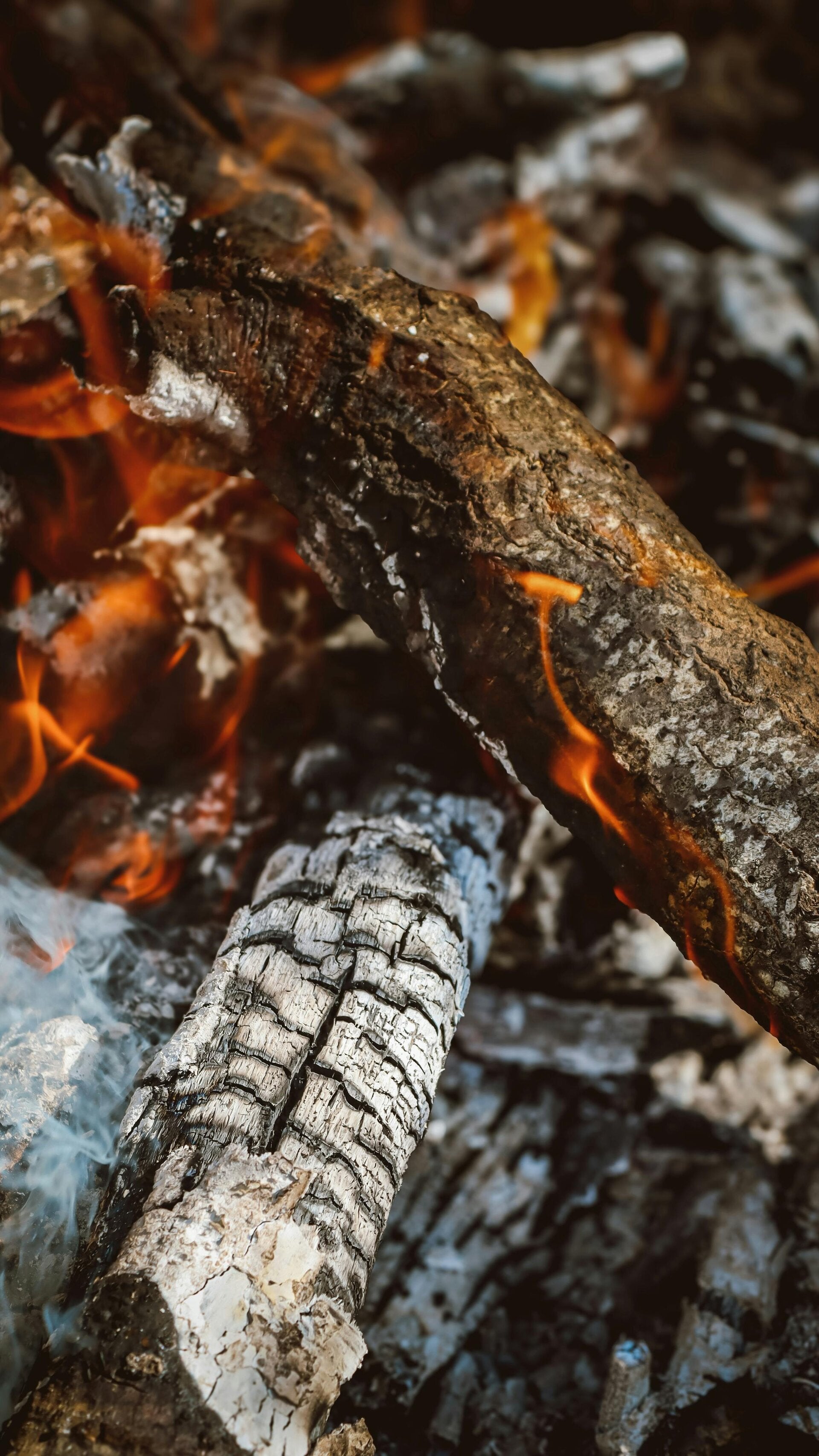
Main fuels
In a UK survival situation, ash is the ultimate primary fuel wood. It provides superior, long-lasting heat and is one of the few woods that will burn effectively even when green. For reliable coals, high-density hardwoods like oak or beech are ideal, provided you can find dry, seasoned wood. [1, 2, 3, 4, 5]
A successful survival fire requires a mix of materials—from tinder to main fuel. Understanding the key differences between native UK species will help you maintain your fire efficiently:
The Best Main Fuels (Hardwoods)
- Ash: Widely regarded as the premier firewood in the UK. It burns hot and steady and can be burnt green or wet in a pinch because of its low natural sap content. [1, 2, 3, 4]
- Oak: Burns very slowly and yields incredible, long-lasting heat. It is excellent for keeping a fire overnight, but it is extremely difficult to ignite and must be completely dry (seasoned) to burn properly. [1, 2, 3, 4, 5]
- Beech: Produces consistent, high heat with an excellent flame. Like oak, it burns for a long time but performs best when fully dried. [1, 2, 3, 4, 5]
Woods for Starting and Maintaining (Softwoods)
- Birch: Burns very quickly but creates a brilliant flame. The bark is a survival necessity; it is highly waterproof, peels easily, and will catch fire even when wet. [1, 2, 3]
- Pine/Fir: These softwoods ignite quickly and burn fast, making them excellent for kindling. However, they spark and spit heavily and are highly resinous, so they shouldn't be your primary wood unless necessary. [1, 2, 3]
What to Avoid
- Willow, Poplar, and Alder: These woods are spongy and have high moisture contents. They produce very little heat, burn quickly, and are notorious for smoking heavily.
- Laburnum: Avoid this tree completely; its smoke is toxic.
- Sweet Chestnut: Burns reasonably well, but it spits excessively, which can be dangerous in a shelter or tight survival space. [1, 2, 3, 4]
Survival Fire Rules of Thumb
- Go for Dead and Dry: Always source dead branches still attached to the tree (standing deadwood). Wood lying on the wet UK ground will have soaked up moisture and be difficult to burn.
- Size Matters: Split larger logs. The dry inside of the wood acts as your main fuel source, while the bark is exposed. [1, 2, 3, 4, 5]