

Shadow stick
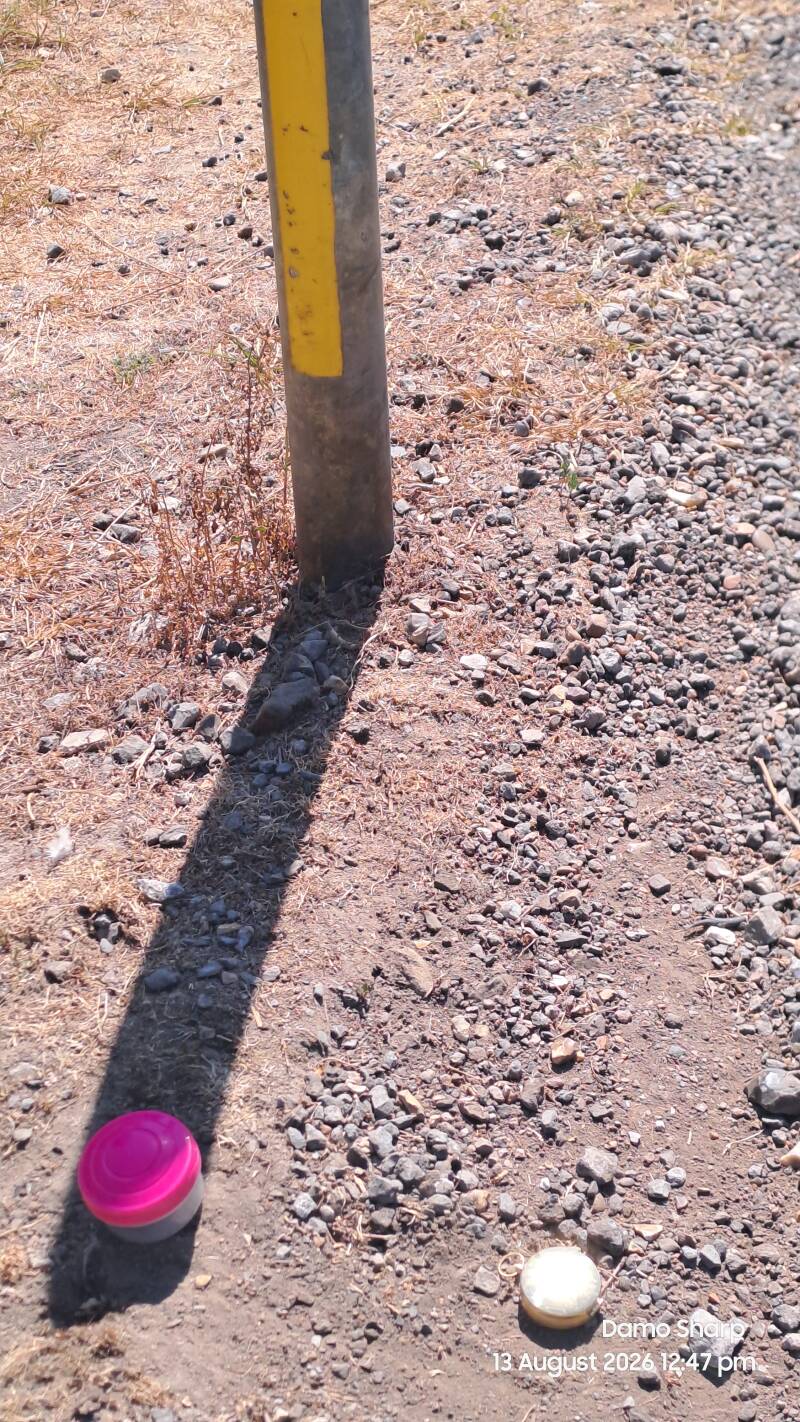
PICTURED: Using a post from a park roadside as my shadow stick.
The shadow stick method uses the sun's natural arc to determine cardinal directions. Drive a straight stick into the ground and mark the shadow's tip with a rock. Wait 15–30 minutes, then mark the new tip. The line between the two marks runs exactly west to east. [1, 2, 3, 4, 5, 6]
How the Shadow Stick Method Works
Because the sun travels from east to west, it casts shadows in the opposite direction, sweeping from west, through the north (in the southern hemisphere) or south (in the northern hemisphere), to the east [1, 2]
Step-by-step instructions
- Find a flat, open area away from trees or anything that obscures sunlight.
- Place a straight stick vertically into the ground, about waist or chest height.
- Mark the first shadow tip with a small rock or stake. This first mark always represents West.
- Wait 15 to 30 minutes for the shadow to move and lengthen.
- Mark the new shadow tip with another rock or stake. This second mark represents East.
- Determine the Axis: Draw a straight line between your first (West) and second (East) markers.
- Find North/South: Place a line or stick perfectly perpendicular (at a 90° angle) to your West-East line. Depending on your current latitude and hemisphere, the perpendicular stick will indicate your north-south line. [1, 2, 3, 4, 5, 6, 7]
Expert Tips & Common Traps
- The "Shortest Shadow" shortcut: If you have the patience to monitor the stick over several hours around midday, the absolute shortest shadow thrown by the stick points directly to True North (in the Northern Hemisphere) or True South (in the Southern Hemisphere). [1, 2]
- Avoid midday rush: Attempting to mark shadows exactly at solar noon (when the sun is highest in the sky) will result in an inaccurate east-west line. Try to perform the steps earlier in the morning or later in the afternoon for a distinct shadow shift. [1, 2]
- The myth trap: A common misconception is that drawing a single shadow mark and waiting will point you to North/South. You must mark two points over time to establish a directional baseline, as outlined in the Georgia Bushcraft wilderness skills overview. [1, 2]