

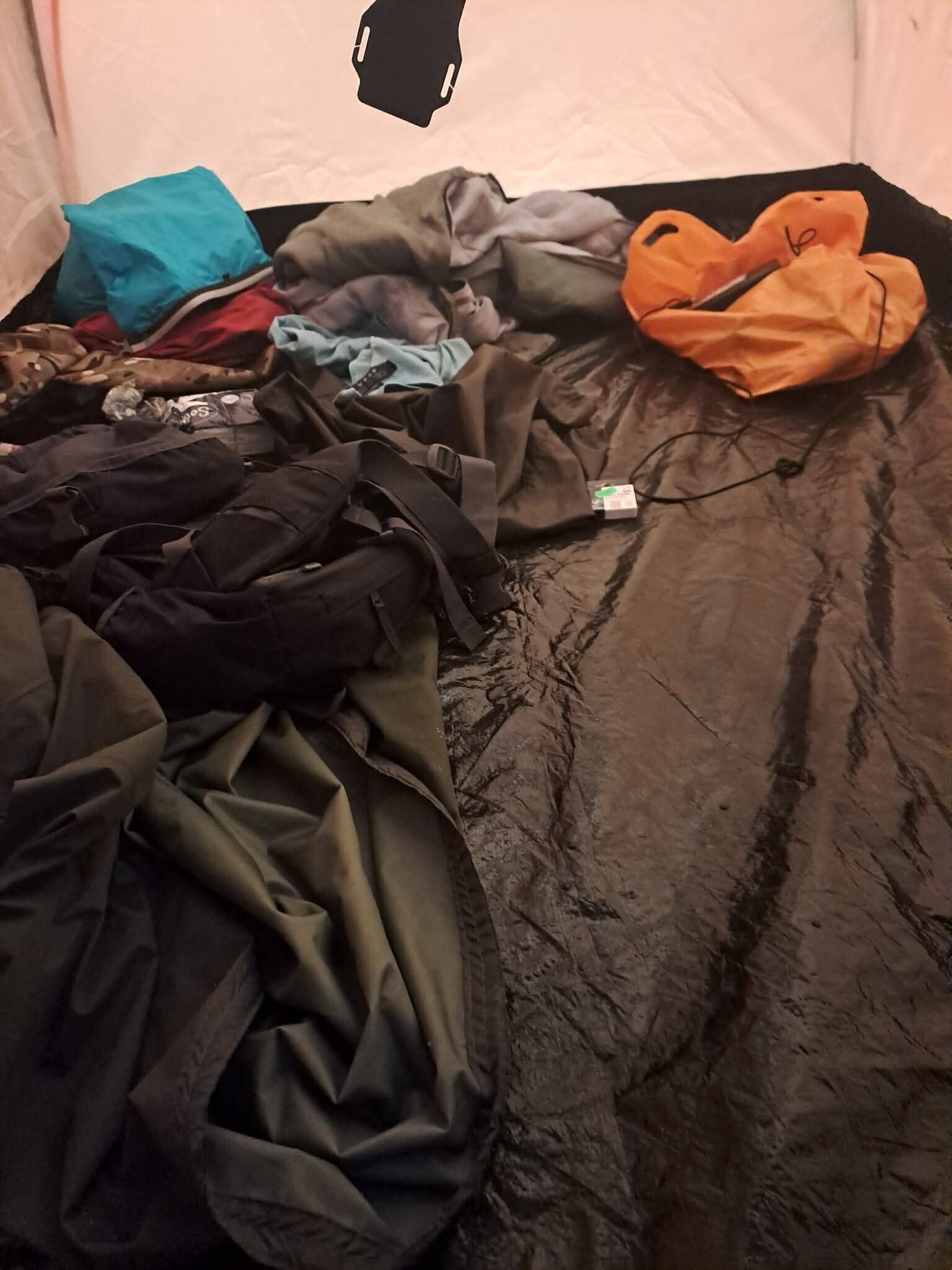
Shelter
In a UK survival situation, your top priority is staying dry and out of the wind. Seek natural shelter (like a dip, rock outcrop, or dense trees) or use carried gear, like a bivvy bag, a survival bag, or a tarp. If you must build a shelter, use deadwood and thick debris rather than cutting live foliage to respect environmental laws. [1, 2, 3, 4]
Carried Gear (The Best Option)
If you are hiking or outdoors in the UK, your lightest and most effective protection is a carried emergency shelter. [1, 2]
- Bothy Bags (Storm Shelters): Unbeatable for group safety. They act as a windproof and waterproof cocoon that you sit in to share body heat and escape the elements. [1, 2, 3, 4]
- Survival Bags / Bivvy Bags: Lightweight plastic or metallic bags that you slide into. They lock in body heat but can cause condensation, so keep your head clear of the opening. [1, 2, 3, 4, 5]
- Tarps: If you carry a tarp, you can quickly tie it between trees using cord to create an A-frame or lean-to shelter. [1, 2]
Building a Natural Shelter
If you lack gear and must build a shelter, follow these principles:
- Location: Find a flat, well-drained area away from water-logged ground, exposed hilltops, and dead tree branches. Remember that in the UK, prevailing winds generally come from the southwest. [1, 2, 3]
- The Debris Hut: Find a sturdy, long branch (ridgepole) and wedge it into the fork of a tree or a pile of rocks. Prop smaller branches against the ridgepole at a 45-degree angle to form a ribcage. [1, 2, 3]
- Insulation: Cover the frame with a thick (at least 30-45 cm) layer of natural debris like moss, dry leaves, and ferns. The thickness is what insulates you from the cold and keeps rain out. [1]
- Ground Insulation: Do not sleep directly on the ground. Lay down a thick bed of pine needles, ferns, or dry grass to insulate your body from the cold earth. [1, 2, 3]
Emergency Accommodation Services
If your survival situation is urban or you are dealing with a local housing emergency in Snodland or the broader UK, immediate resources are available: [1]
- Severe Weather Emergency Protocol (SWEP): Local councils open emergency sleeping shelters during extreme cold or severe weather. [1]
- Emergency Housing: Contact your local council (e.g., Tonbridge and Malling Borough Council for Snodland) for statutory emergency housing if you find yourself suddenly homeless. [1]
- StreetLink: If you are sleeping rough or need to connect someone else to local outreach teams, use the StreetLink service to alert local support. [1]