

Natural tinders
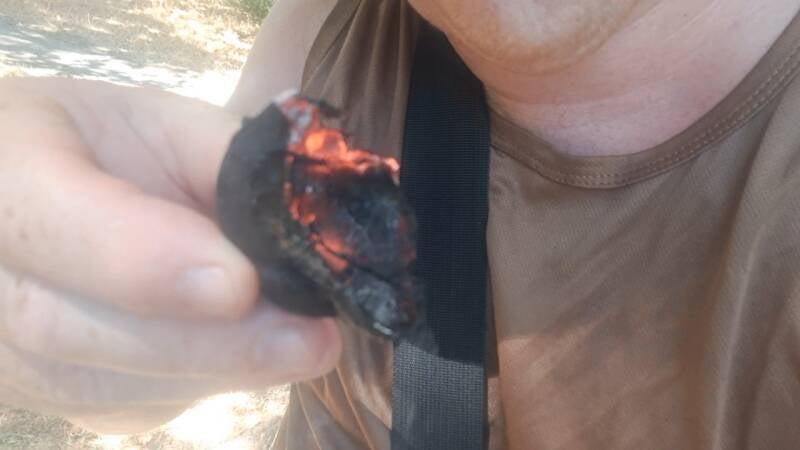
Pictured: King Alfred's cake. AKA Cramp ball or Daldinia concentrica
In the UK, the best natural tinders for survival are dry, fibrous materials that readily catch a spark. Prime woodland sources include birch bark, fluffy clematis seeds (Old Man's Beard), and Cramp Balls (a hard, black fungus), which take a spark like char cloth [1, 2, 3, 4]
Top UK Natural Tinders
- Birch Bark: Highly reliable even when wet due to its natural oils. Scrape the surface to create a fluffy nest. [1, 2, 3, 4]
- Old Man's Beard (Clematis vitalba): The feathery, white seed heads of this common hedgerow vine act as an excellent tinder bundle for firesteels. [1]
- Cramp Ball (Daldinia concentrica): Found on dead ash trees, this hard black fungus burns slowly and is a top-tier choice for traditional flint and steel. [1, 2, 3, 4]
- Dry Grasses & Bracken: Readily available in open areas; bunch them into a "bird's nest" and blow gently once an ember is caught. [1, 2]
- Thistle / Cattail (Bulrush) Fluff: The downy seeds from these plants take sparks instantly but burn extremely fast. [1, 2]
Sourcing & Preparation Tips
- Scout Dead Standing Wood: Tinder should ideally be harvested from standing dead trees or dry underbrush rather than from damp ground.
- Feather Sticks: If larger tinder is sparse, use a knife to shave ultra-thin curls into a dry stick, building a base for smaller sparks.
- Emergency Backups: If conditions are incredibly damp, many bushcrafters augment natural foraging with prepared commercial options like Flamers Natural Tinder. [1, 2]