

Collecting water
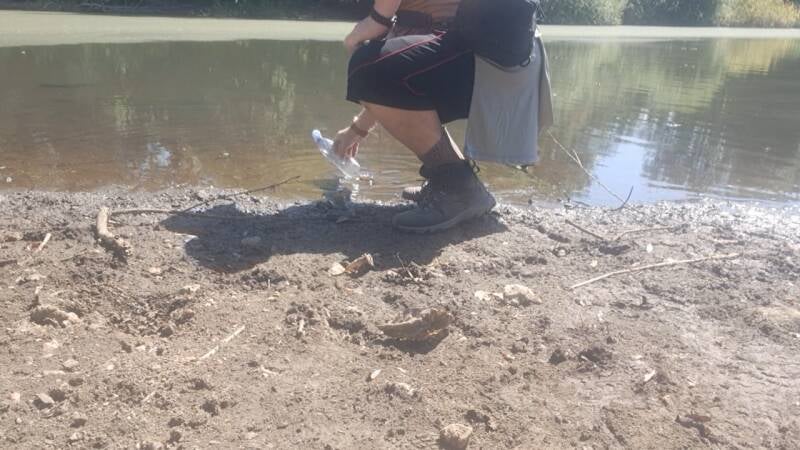
PICTURED: Collecting water from a lake, ready for processing.
To survive in the UK wilderness, you need 2 to 4 litres of water daily. In an emergency, always purify natural water to avoid pathogens like Cryptosporidium and E. coli. Prioritize these four methods to collect and clean your water: [1, 2]
- Rainwater Catchment: The UK's frequent rainfall is your safest natural source. Tie off a clean plastic poncho, tarp, or wide-mouthed container and leave it in an open area to catch rain directly. [1]
- Solar Stills: Dig a hole in moist soil, place a collection cup in the centre, cover the entire hole with a clear plastic sheet, and weigh down the edges. The sun's heat draws moisture from the ground, which condenses on the plastic and drips into the cup. [1, 2]
- Transpiration Bags: Tie a clear plastic bag over a leafy, healthy branch and seal the opening tight. As the plant undergoes photosynthesis, it will release water vapour that condenses inside the bag. [1, 2]
- Surface Water & Soil Seepage: Avoid drinking directly from any UK stream or river without treatment. If none of the above methods work, dig a hole near a water source or in damp marshland. Let the surrounding mud settle, then scoop the clearer water into a container to filter. [1, 2, 3]
Purification Methods
Never drink untreated water in the UK. Ensure your water is safe by using one of these techniques: [1]
- Boiling: Bring water to a rolling boil for at least one minute (or up to 3 minutes at higher altitudes) to kill bacteria and parasites.
- Filtration & Chemicals: Use a portable pocket filter (e.g., a Sawyer Squeeze) or chemical purification tablets (like chlorine dioxide) to strip out harmful microorganisms. [1, 2, 3, 4]