

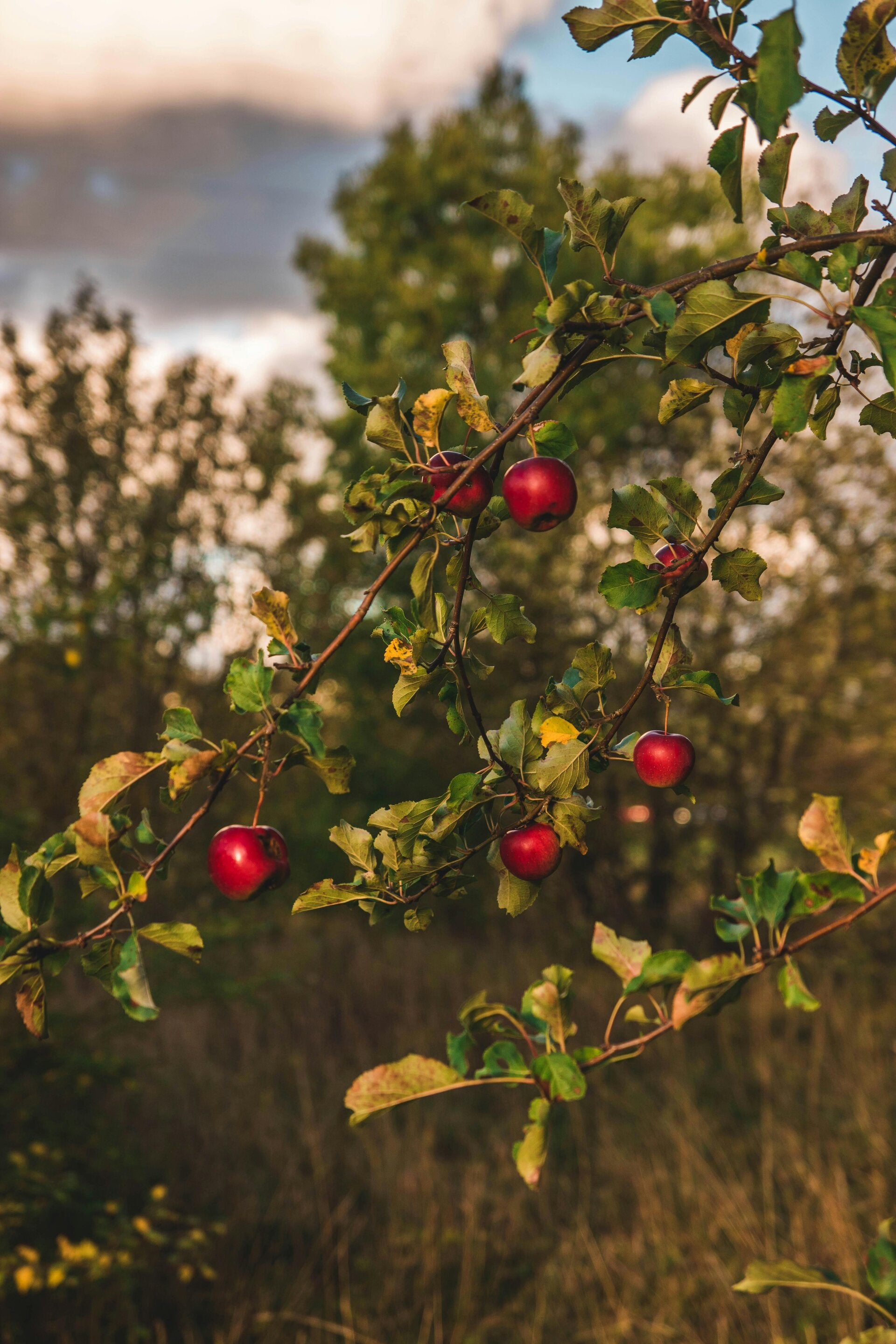
Trees for food
The UK is home to a rich variety of food-producing trees. Native and introduced species provide everything from sweet fruits and protein-rich nuts to edible leaves and saps. [1, 2, 3]
The most common edible UK trees, categorised by what they provide to humans, include:
🍎 Fruits, Berries & Hips
- Crab Apple (Malus sylvestris): The UK's only native apple. Highly tart, they are perfect for cooking into jellies or sauces.
- Hawthorn (Crataegus monogyna): Young spring leaves and flowers are edible raw, while the berries can be cooked into fruit leathers or "cheese".
- Blackthorn (Prunus spinosa): Produces sloes, which are famously used to flavour sloe gin.
- Rowan / Mountain Ash (Sorbus aucuparia): Bright red berries that must be cooked (often into jellies for game meats).
- Elder (Sambucus nigra): Elderflowers are used for cordials, and the dark berries are used for syrups and immune-boosting elixirs.
- Whitebeam (Sorbus aria): Produces edible orange-red fruit, often called "chess apples", which are best eaten soft and cooked. [1, 2, 3, 4, 5, 6]
🌰 Nuts & Seeds
- Hazel (Corylus avellana): Produces sweet, highly nutritious cobnuts (hazelnuts), which ripen in late autumn.
- Sweet Chestnut (Castanea sativa): Introduced to the UK centuries ago; the nuts can be roasted over an open fire or pureed.
- Common Beech (Fagus sylvatica): Produces small, triangle-shaped nuts with a taste similar to sunflower seeds or mild walnuts. [1, 2, 3, 4, 5]
🍃 Leaves, Sap & Inner Bark
- Silver Birch (Betula pendula): Sap is tapped in early spring to be drunk fresh or fermented into wine; the sweet inner bark can also be eaten in emergencies. [1, 2, 3, 4, 5]
- Pine (Pinus spp.): Needles can be steeped in hot water for a vitamin C-rich winter tea, and inner bark (cambium) has historically been dried and ground. [1, 2, 3]
- Lime Tree (Tilia spp.): Tender young leaves make an excellent, mild, and mucilaginous base for fresh spring salads. [1]
⚠️ A Note on Foraging & Safety
Many trees have toxic look-alikes. Always verify your identification before eating wild foods.
- Resources: Use the Woodland Trust or Food Standards Agency foraging guides for safe, responsible collection protocols.
- Avoid: Do not eat the berries from the yew tree, holly tree, or spindle tree, as these are highly toxic to humans. [1, 2, 3, 4, 5]