

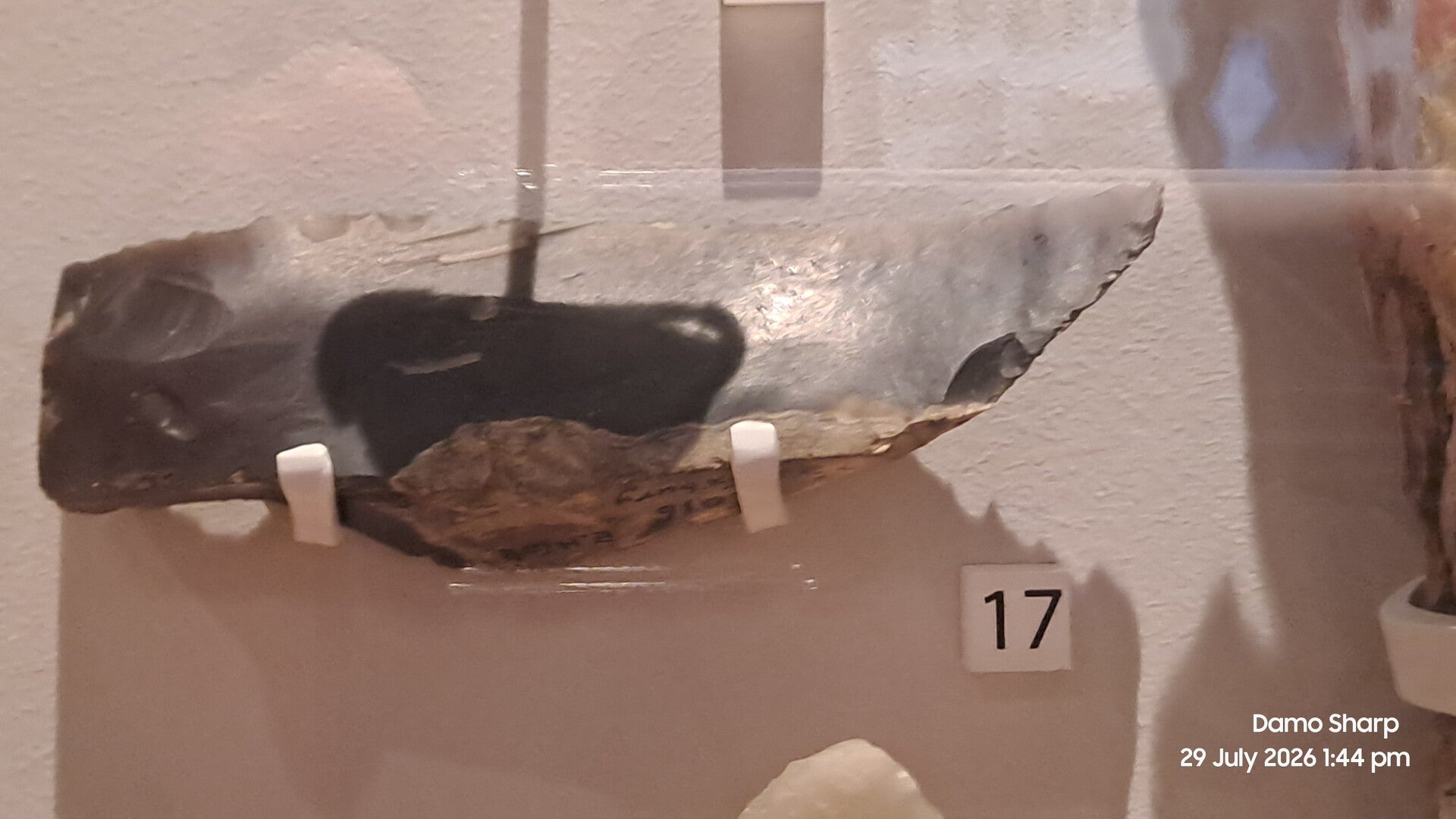
History of the knife
The knife is humanity’s oldest tool, with primitive cutting edges dating back over 2.5 million years—predating modern Homo sapiens. Originally fashioned from fractured stone, bone, and volcanic glass, the knife evolved alongside human civilisation to become our primary instrument for hunting, eating, and warfare. [1, 2, 3, 4, 5]
1. The Stone Age (2.5 million – 3000 BCE)
Early hominids cracked round rocks together to create Oldowan tools with sharp, serrated edges. As humans evolved, they began knapping flint and shaping obsidian (volcanic glass) into more refined, specialised blades. Obsidian blades can achieve an edge sharper than modern scalpels, though they are highly brittle. [1, 2, 3, 4, 5]
2. The Bronze & Iron Ages (3000 BCE – 500 BCE)
The discovery of metallurgy fundamentally changed knife-making. [1, 2]
- Bronze Age: Early metal blades allowed artisans to create distinct, durable shapes. The famous Gebel el-Arak Knife (circa 3450 BCE) from Egypt is a pinnacle of this era, featuring an ivory handle and finely chipped flint blade. [1, 2, 3]
- Iron Age: Iron eventually replaced bronze due to its superior strength and reliability. The first folding knives and distinct, separate handles (often carved from bone) emerged during this time. [1, 2]
- Stainless steel: To prevent corrosion.
- Ceramics and Titanium: For specialised lightweight, non-reactive edges. [1, 2, 3]